

Lamp: Clara Wolcott Driscoll for Tiffany Studios, "Dragonfly" Lamp, Brooklyn Museum, CC-BY. Water pipe: courtesy of Jane West.
You know those dreamy Tiffany lamps? The dragonflies, the wisteria, the ones your fancy aunt swears are "the real thing"? For most of the last century, the credit went to one man: Louis Comfort Tiffany. Then, in 2005, researchers turned up a stack of old letters showing that some of the most famous designs actually came from a woman named Clara Driscoll.
Sound familiar? 👀
Women have been shaping glass for centuries. We just haven't been getting the credit. And yes, that includes the glass you're packing a bowl in tonight. So pull up a seat, babes. It's time for a little herstory lesson.
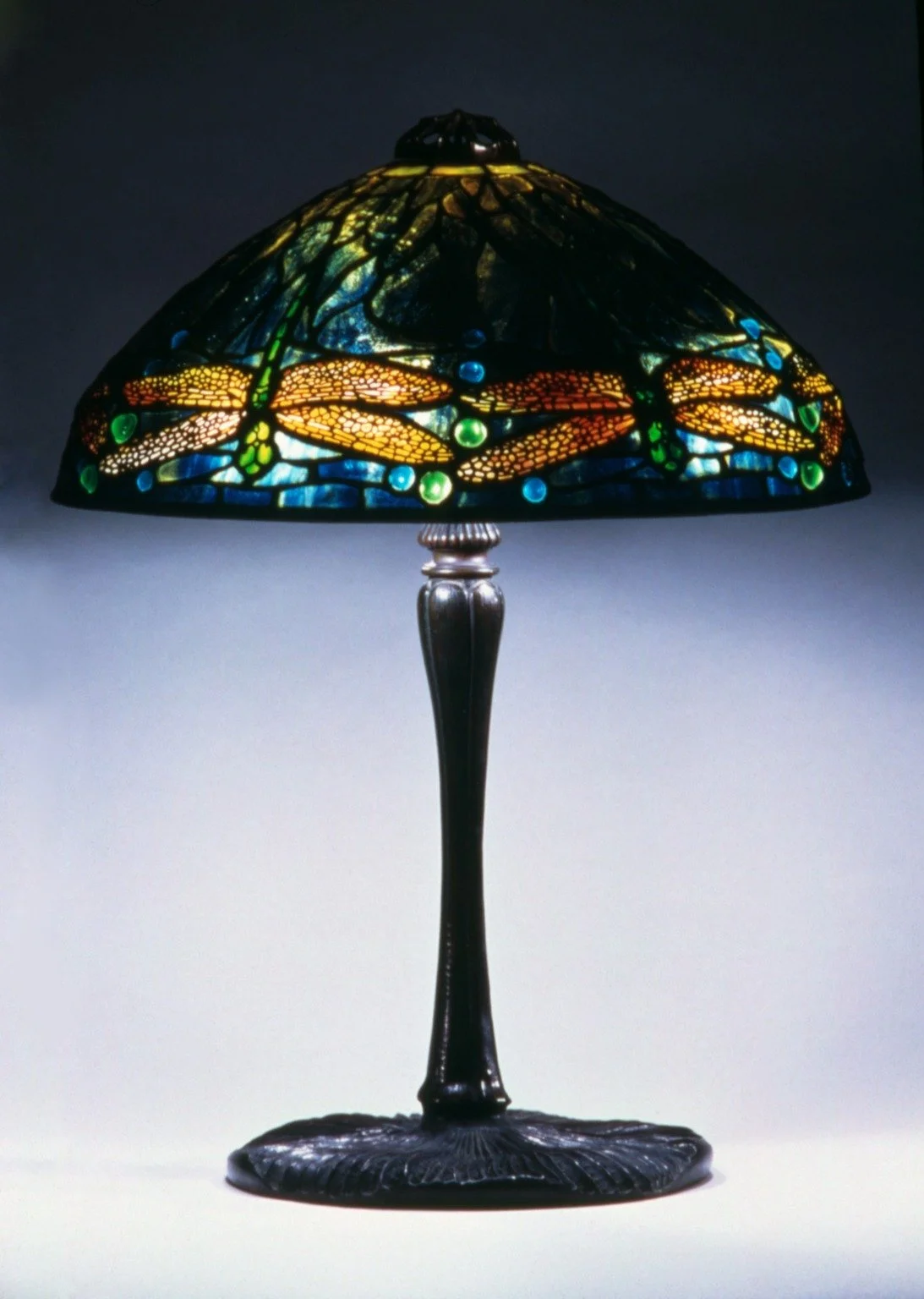
Clara Wolcott Driscoll for Tiffany Studios, "Dragonfly" Lamp, ca. 1900–1920. Brooklyn Museum, Bequest of Laura L. Barnes, 67.120.54. Creative Commons-BY (Photo: Brooklyn Museum).
Before Tiffany, There Were Beads (and Christmas Ornaments)
Women's fingerprints are all over glass history, if you know where to look. According to the Corning Museum of Glass, women were stringing Venetian glass beads as early as the mid-1600s, and guild rules let the female relatives of glass masters take a limited hand in making them. John Singer Sargent even painted the women who strung them, known as impiraesse.
Over in Germany and Bohemia, women flameworked and silvered glass Christmas ornaments. And an 1895 issue of Scientific American shows women making incandescent light bulbs.
Translation: women were literally lighting up the room. 💡
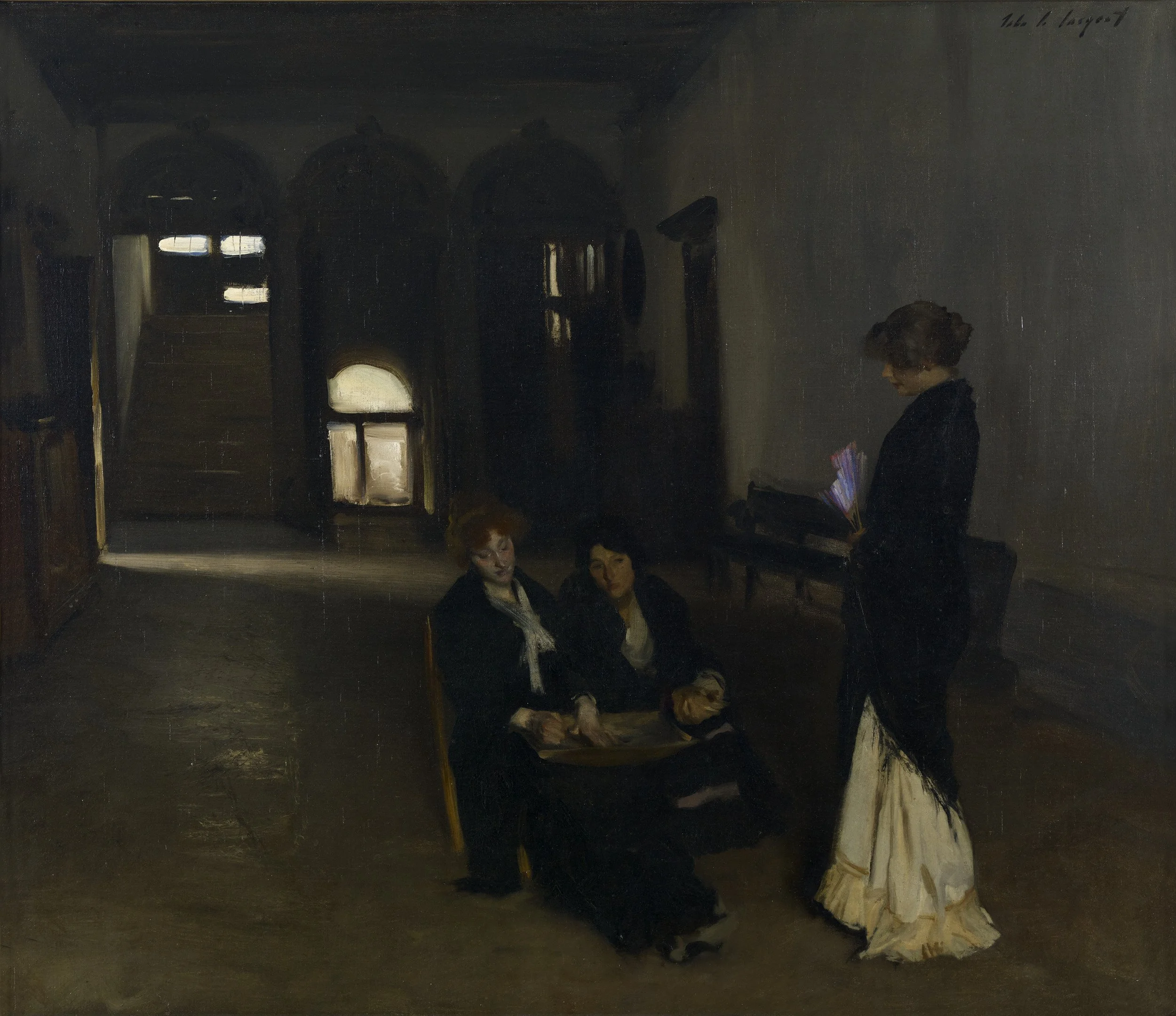
John Singer Sargent, Venetian Bead Stringers, c. 1880–82. Buffalo AKG Art Museum.
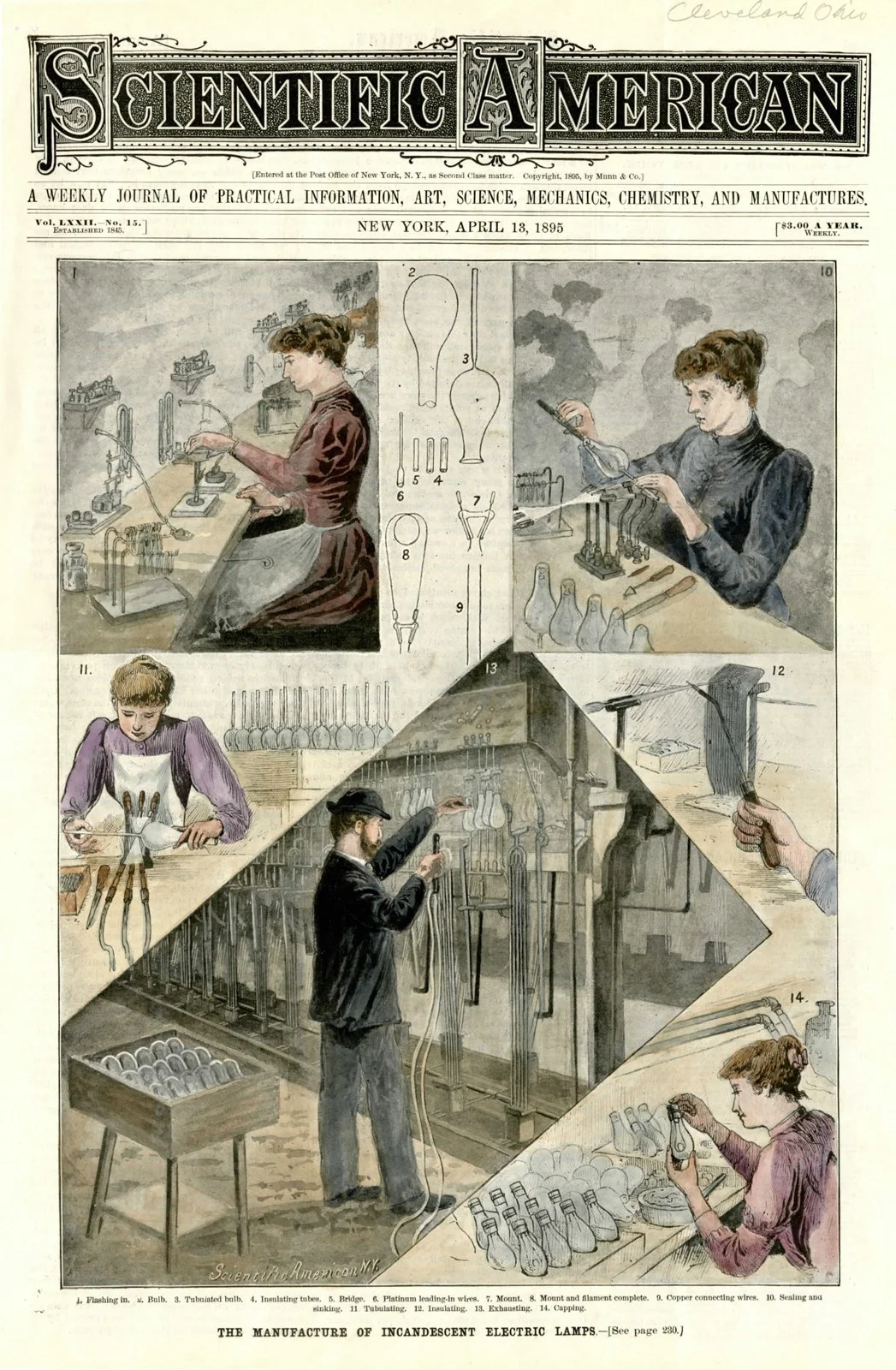
"The Manufacture of Incandescent Electric Lamps," Scientific American, April 13, 1895. Courtesy of the Rakow Research Library, Corning Museum of Glass.
The OG Glass Girls Were Literal Showwomen
Long before Instagram Reels, women were doing live glass demos for packed crowds. A 1740 Dublin newspaper describes a Mrs. Johnson, one of the era's traveling women lampworkers, who made human figures, birds, swords and ships out of glass.
By the 1800s, touring troupes were working their way across the US, including one run by Madame Nora Allen, who billed herself as the only lady glass artist in the business. Picture a traveling show where glass got spun into tiny animals and sculptures while the audience gasped. Madame Nora even owned a glass steam engine and a glass fire engine, which she sold to another glassworking family, the Howells, in 1937. And the Howell women? They kept the act alive, blowing glass for crowds well into the 20th century.
Madame Nora was flameworking before flameworking was cool. We love a woman with stage presence.
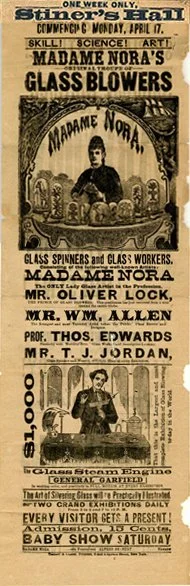
Poster for Madame Nora's Original Troupe of Glass Blowers, possibly 1876. Courtesy of the Rakow Research Library, Corning Museum of Glass.
Meanwhile, at Tiffany…
In 1892, Tiffany opened its Women's Glass Cutting Department, where women selected and cut the glass for its windows and lamps, ending what had been a male monopoly. For context, an 1887 English glass trade journal noted that glass cutting was "closed to the 'softer sex'" in England. Cute.
Running that department was Clara Driscoll, a farm girl from Ohio who designed some of Tiffany's most iconic pieces, including the Dragonfly and Wisteria lamps. According to NPR, Tiffany met with her every week to go over her designs and often praised them, but in his company's literature, he credited no one but himself. (A 1904 article did credit her with the prize-winning Dragonfly lamp, but the world mostly forgot.)
It took her letters home to her mother and sisters, rediscovered in 2005, to set the record straight. In early 2007, the New-York Historical Society opened an entire exhibition around Clara and her "Tiffany Girls."
Credit where credit is due, babes. Even if it shows up a century late.
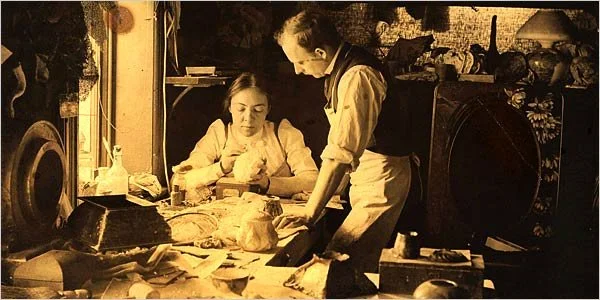
Clara Driscoll in her Tiffany Studios workroom with Joseph Briggs, 1901.
So Why Does Pipe History Look So… Male?
Fast forward to the cannabis world. Ask anyone about the history of glass pipes and you'll hear the same legends: Bob Snodgrass at the torch, Grateful Dead parking lots, a pipe on your belt as a fashion statement. (If you haven't read our Green Room chat with glass artist Jason Harris, it's the ultimate time machine to that era.)
It's a great story. It's also a story where the women mostly got left out of the retelling.
The wider glass world has been wrestling with this for a while. Back in the late 1980s, celebrated flameworker Ginny Ruffner published an article in American Craft digging into the gender gap in the glass field. Decades later, the conversation is finally catching up with the pipe scene.
Meet the Boro Babes
Pipe makers work in borosilicate glass, or "boro" for short, and the women working it have built a whole community under hashtags like #babesofboro, #girlswhoblowglass and #womenofglass. Go scroll them. We'll wait.
A few names the community keeps shouting out:
Katy Wright Glass (@katywrightglass): She's been "on a linework kick since 2015" (her words), and it shows. Her sherlocks and hammer pipes are wrapped in hypnotic, candy-colored swirls that look like they're moving.
Sarita Glass (@saritaglass): Functional glass inspired by vintage and botanical motifs. Think pastel florals, Talavera-style blues and little cactus gardens sprouting out of glass teacups. Even her Puffco tops look like heirloom china.
LaceFace Glass (@lacefaceglass): Lacey "LaceFace" Walton makes sculptural pieces that blur the line between pipe and fine art: glass goddesses, mushroom cottages, even a whole Cyborg series. Her Instagram highlights include a demo at the Corning Museum of Glass. Full-circle moment, babes.
And the demand is real. On Reddit's r/glassheads, the founders of a new Cleveland head shop called The Girls' Joint asked for recommendations because they wanted 80% of their inventory to come from women and minority makers. The replies turned into a massive list of incredible artists. And yet, at least one commenter had to call out the downvotes the post was getting.
Make of that what you will. We know what we make of it.
The Shelf Is Changing, Too
Here's the thing: women make up a huge and growing share of cannabis consumers, as we pointed out in our deep dive on The Wrong Girls. And the accessories are finally catching up.
Women-owned brands like Jane West, My Bud Vase and Her Highness are designing pieces that look like they belong on your bookshelf, not hidden under a dorm-room bed.
Ali Alavi, founder of the online headshop DankGeek, has watched the shift happen in real time: "These days, when you walk around the tradeshows, you certainly see brands that are woman-owned, like Jane West, Her Highness, and My Bud Vase, to name a few."
If you want to see what that looks like, DankGeek's cute bongs are a fun place to start.
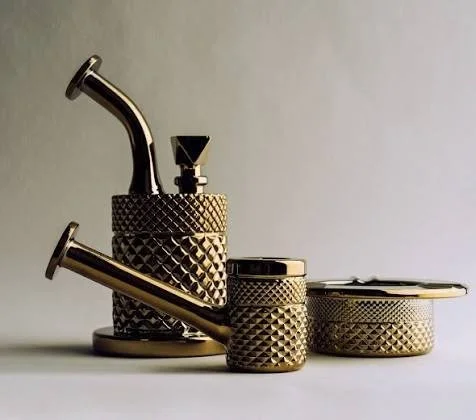
Jane West's Twenties Collection. Courtesy of Jane West.
How to Support the Glass Girls (Without Leaving the Couch)
Follow and share. Scroll #babesofboro, follow the artists above and actually repost their work. The algorithm is not doing them any favors.
Buy direct when you can. Lots of independent artists sell straight from their own shops. Sarita and LaceFace both link their Etsy stores right in their bios.
Ask who made it. Whether you're shopping online or at your local head shop, ask who's behind the piece. Your money is a vote, and the girlies are on the ballot.
Herstory, Still Being Written
From Venetian bead stringers to Clara Driscoll's dragonflies to the boro babes running torches today, women have been shaping glass the whole time. The only thing that's changed is who's paying attention.
So next time you pack a bowl, take a second to think about who made the piece in your hand. And if it was a woman?
The Tiffany Girls would be proud. 💚