
The Cannabis Entourage Effect Explained: THC, CBD, Terpenes and the Science of Plant Synergy
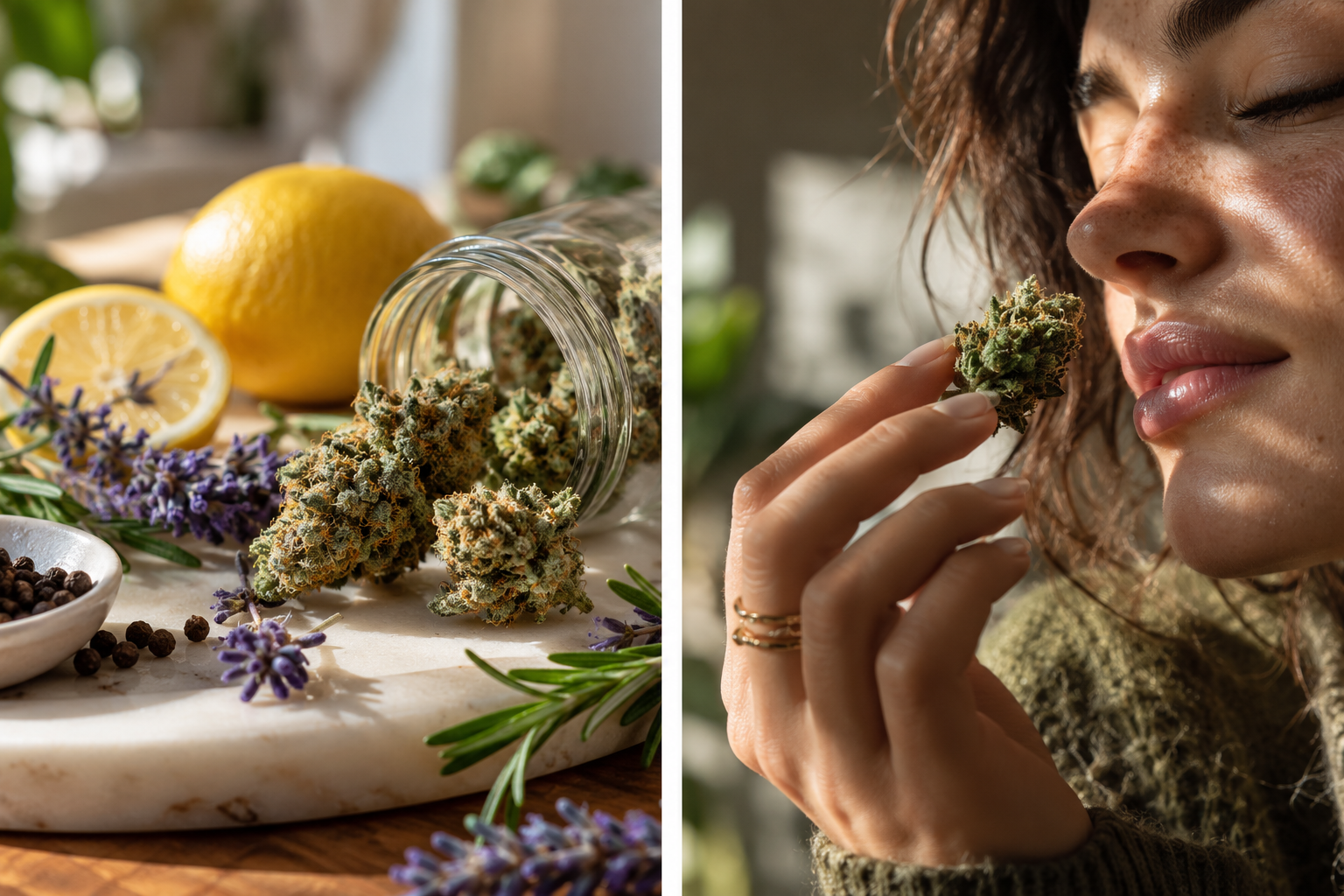
You know that friend group where everyone brings something different to the table? One is funny, one is calming, one always has snacks, and somehow the whole group together is better than any individual member? Cannabis might work a little like that too.
Enter the entourage effect, a theory that the many compounds found naturally in the cannabis plant may interact with one another to create effects that are different from, or potentially greater than, what those compounds produce individually. In other words, THC and CBD may be the celebrities of the cannabis world, but they aren't necessarily working alone.
A 2020 scientific review published in Current Neuropharmacology examined the potential interactions between cannabinoids and terpenes, particularly their possible relevance to mood and anxiety disorders. The researchers describe cannabis not as a single-compound substance, but as a remarkably complicated botanical cocktail containing numerous cannabinoids alongside a vast array of aromatic compounds called terpenes.
High Herstory note: This article is for educational purposes only and is not medical advice. Cannabis can affect everyone differently, and research into the entourage effect is still developing.
Wait, What Exactly Is the Entourage Effect?
The concept dates back to research by Israeli scientists Raphael Mechoulam and Shimon Ben-Shabat, who proposed that compounds accompanying the body's primary endocannabinoids could enhance their biological activity. The idea was later expanded into the concept of botanical synergy, suggesting that a dominant plant compound may be supported or modified by other compounds around it.
Basically: the whole plant might sometimes hit differently than one isolated molecule.
Researchers have even described two potential kinds of entourage interactions. An "intra-entourage" effect refers to cannabinoids interacting with other cannabinoids, while an "inter-entourage" effect refers to interactions between cannabinoids and terpenes.
Translation? Your flower is hosting a very complicated molecular group chat.
Meet the Terpenes
If cannabinoids are the part of the plant everyone talks about, terpenes are the supporting cast finally getting their close-up.
Terpenes are aromatic compounds produced by cannabis and many other plants. They're responsible for much of the smell and flavor we associate with different cultivars. Limonene contributes citrusy aromas, for example, while myrcene is commonly associated with earthy, musky notes.
And they aren't exclusive to cannabis. Terpenes occur throughout the plant kingdom, from lavender to citrus fruit.
The review notes that cannabis can contain hundreds of terpenes, yet relatively few have been extensively studied for their biological effects. Researchers have proposed that some terpenes may have activity of their own and could potentially interact with cannabinoids in ways that influence the overall experience.
That's where the entourage-effect theory gets especially interesting.
Your Body Already Has a Cannabis-Like System
Plot twist: cannabis didn't invent cannabinoids.
Our bodies naturally produce compounds called endocannabinoids, including anandamide and 2-AG. These compounds are part of the endocannabinoid system, or ECS, a signaling system involving receptors, enzymes and naturally occurring endocannabinoids.
The ECS is found throughout the body and is involved in numerous physiological processes. Two of its best-known receptors are CB1 and CB2. Plant-derived cannabinoids, or phytocannabinoids, can interact with this system in different ways.
THC interacts strongly with cannabinoid receptors, particularly CB1. CBD behaves quite differently and appears to work through a much more complicated collection of biological pathways, many of which researchers are still trying to understand.
So while we often reduce cannabis to a THC percentage printed on a package, the actual biology is much more complicated.
Could Terpenes Change the Experience?
Potentially. But this is where we put on our responsible science glasses.
The researchers reviewed evidence suggesting that certain terpenes may have biological effects relevant to areas like anxiety and mood. For example, limonene and other plant-derived terpenes have been investigated in preclinical research for potential anxiolytic-like effects. Some terpene-containing essential oils have also been studied for their effects on anxiety.
That makes the possibility of cannabinoid-terpene interactions intriguing.
However, intriguing is not the same thing as proven.
The review specifically notes that although terpenes may make a meaningful contribution to cannabis's effects, the proposed therapeutic entourage effect between cannabinoids and terpenes still requires clinical verification. Much of the evidence comes from laboratory studies, animal research, research involving isolated compounds or studies of terpenes outside cannabis itself.
So no, science has not definitively proven that a particular terpene plus THC equals a particular mood.
Your dispensary budtender may have a favorite theory, but Mother Nature has not finished peer review.
What About Indica and Sativa?
Here's another reason the entourage effect matters: the traditional "indica makes you sleepy, sativa makes you energetic" system may be far too simplistic.
The review discusses the popular association of myrcene-rich cannabis with relaxation and limonene-rich varieties with more alert or uplifting effects, but importantly describes these associations as assumptions that still require further scientific validation.
Instead of relying exclusively on an indica/sativa label, looking at the plant's broader chemical profile, including cannabinoids and terpenes, may ultimately give researchers a more useful way of understanding why different cannabis products can produce different experiences.
And anyone who has ever tried two flowers with the exact same THC percentage and had completely different evenings already understands why that's an interesting question.
The Plant Is Complicated, Babe
Perhaps the biggest takeaway from entourage-effect research isn't that scientists have cracked the cannabis code. It's almost the opposite.
Cannabis is incredibly chemically complex.
THC matters. CBD matters. Terpenes may matter. Other cannabinoids, flavonoids and lesser-studied compounds may matter too. Dose, individual biology, consumption method and the specific chemical composition of a product can all complicate the picture.
The 2020 review concludes that combinations of cannabinoids and terpenes deserve significantly more investigation, particularly to determine whether those combinations could eventually have therapeutic applications.
So the entourage effect remains an exciting scientific hypothesis, not a universal rule of cannabis.
But it does offer a pretty compelling reason to stop judging flower exclusively by the biggest THC number on the menu.
Because when it comes to this plant, sometimes the supporting cast deserves top billing too.
High Herstory note: This article is for educational purposes only and is not medical advice. Cannabis can affect everyone differently, and research into the entourage effect is still developing.