The Green Room: Peter Mercado-Reyes on Building New York’s Cannabis Industry, Community & Culture
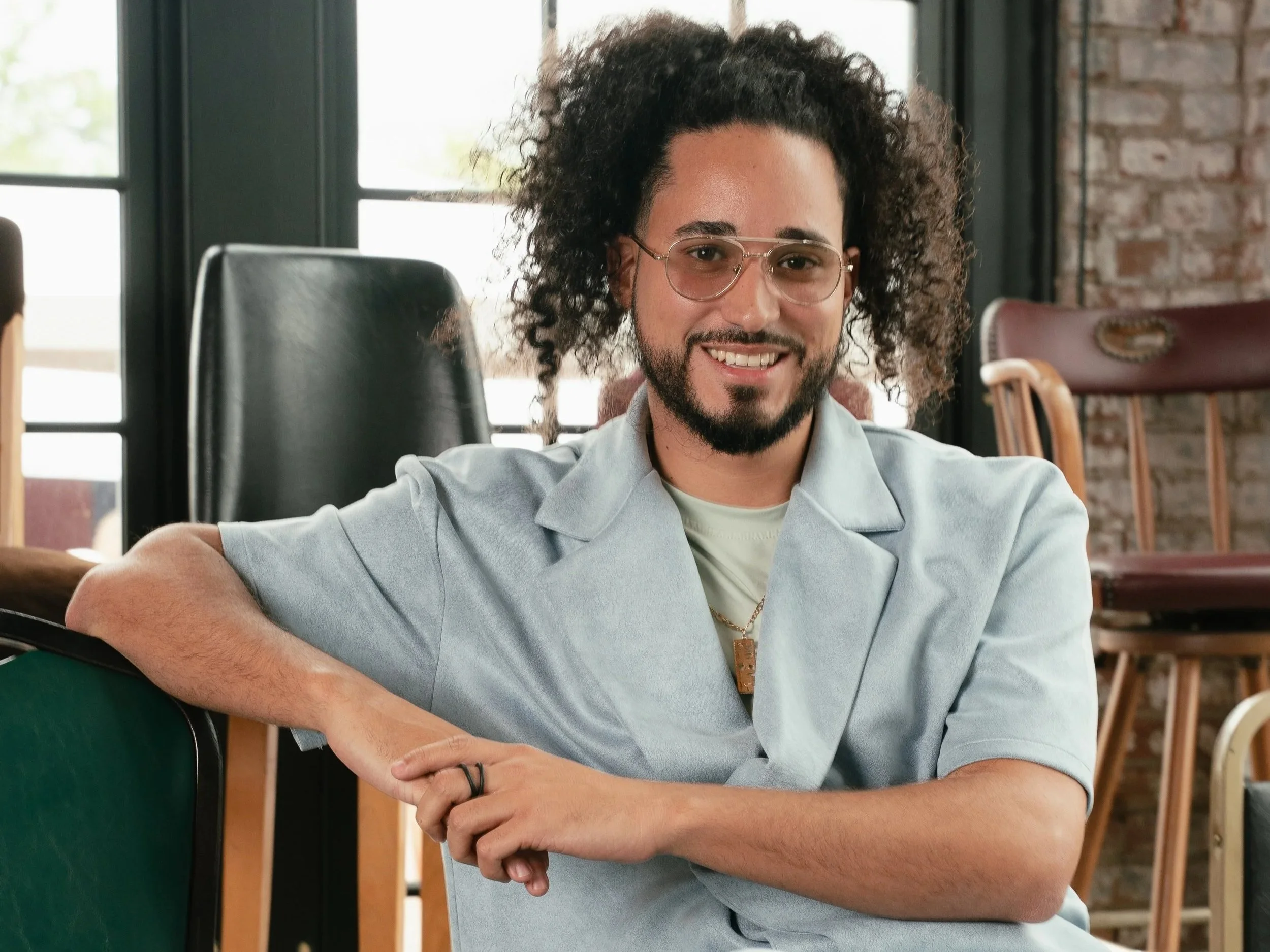
Photo by Reynold Fernández
Peter Mercado-Reyes is an ecosystem architect operating at the intersection of cannabis, culture, and commerce. He believes cannabis legalization marks the unlocking of one of humanity’s most powerful plant medicines; modernized, refined, and responsibly integrated to serve the people at scale.
As Chief Insights Officer at On the Revel, producers of Revelry, New York’s premier cannabis trade and cultural platform, Peter transforms fragmented retail data, regulatory shifts, and brand performance signals into strategic clarity. These insights drive initiatives designed to meet the market in real time, elevating brands, empowering retailers, and fostering deeper operator collaboration. His work ensures Revelry remains more than an event platform; it is a responsive ecosystem that reflects the industry’s immediate needs and accelerates collective growth.
In parallel, he serves as Head of Brand Partnerships and Procurement at CONBUD, where he drives creative partnerships, inventory analytics, and brand curation. His approach balances cultural relevance with operational discipline, optimizing velocity and margin while preserving authenticity and community impact.
For Peter, commerce is not extraction, it is reinvestment. His long-term vision is to engineer regenerative economies where data, capital, culture, and community align, transforming cannabis into a disciplined, restorative force for wellness, ownership, and economic resilience.
About Revelry
Revelry is New York’s go-to hub for cannabis innovation, uniting licensed operators, top brands, and industry pros through dynamic events that fuse the cannabis industry with New York’s unmatched energy, cultural influence, and status as a global influencer. Now in its tenth year, On The Revel, the producers of Revelry have built a reputation for creating transformative spaces where business and culture converge. From its spring trade shows in Hudson, NY, to its landmark fall events in Manhattan, the company is committed to fostering strategic partnerships and driving significant market growth. With a deep focus on inclusivity and a passion for elevating the cannabis industry, Revelry continues to redefine what it means to lead and innovate on a local, national, and international scale.
We asked Mercado-Reyes to tell us about their insights into the cannabis industry today and what’s in store for the future. Read on to learn more.
1. What standard piece of traditional, suits-and-tie “corporate startup wisdom” do you think is completely useless in the legal cannabis market?
“Move fast and break things.” Absolutely not. We’re in cannabis—things are already broken. The regulations are changing, somebody’s bank account or payment processor is down, a delivery is a week late, and somehow everybody still needs to get paid.
Move thoughtfully. Be proactive. Build processes that are intuitive enough that the person behind you can execute without having to call you and ask what the hell you were thinking. Otherwise, you’re just creating something you’ll have to fix again six months from now.
Stoner-proofing is real. Good systems should survive a little chaos and lack of short-term memory.
2. Describe the exact setting, the strain, and the audio soundtrack of your absolute dream smoke session. Who is passing the joint?
Puerto Rico. Somewhere up in the mountains along a river where I can still see the ocean. A really good old-school Haze in the joint, food nearby, and dembow and reggaeton playing.
Bad Bunny is passing it.
By the second joint, Benito y yo have either solved all of Puerto Rico’s problems—or we’ve decided yo hago lo que me da la gana and abandoned the entire conversation to go find some incredible hole-in-the-wall food.
Honestly, both feel productive.
3. What is the funniest or most creative way you’ve had to explain your job to someone completely outside of the industry?
I usually just say, “I professionally buy weed and throw weed fairs.”
That usually gets a follow-up: “How the hell did you get into that?”
Which makes it even funnier because then I have to explain that the story starts with me studying biochemistry and spending six years working as a neuroscientist.
So apparently the pipeline is: biochemistry → neuroscience → professional weed buyer.
Very linear career path.
4. If you are reincarnated as a specific cannabis product in a high-end luxury dispensary, what form are you taking and what does your packaging look like?
A completely unnecessary but ridiculously good 5-gram rosin-infused cannagar made with proper Haze flower.
The packaging is minimal: a brushed-metal cylinder, subtle gold accents, tropical details—luxury without screaming that it’s luxury.
And engraved down the side:
“Catalyze the vibes and conversation. Indulge recklessly.”
Basically, if I’m getting reincarnated as weed, I’m not coming back as a 10-pack of gummies.
5. As someone who intentionally maps out human connection for a living, is there a single most unlikely connection or memorable partnership that happened purely because two people crossed paths at a Revelry event?
Honestly, there are too many to pick just one.
What gets me is watching somebody walk into Revelry with a folding table and a dream, and then a year later they’re back with a full 10×10 booth, a real team, and an activation people remember. I’ve watched brands like Dark Star Chocolates and Canopi Elixirs grow right in front of us.
That’s the part I love because sometimes the most valuable thing we create isn’t actually the event.
It’s putting the right New Yorkers in the same room at the right moment and letting them cook.
6. If your brain right now could be represented by a single bodega snack combination, what are you picking off the shelf?
Honey turkey, pepper jack, a little chipotle, black olives, hot on a hero. Bloom Pear Scare to drink and a bag of Nerds Gummy Clusters.
Spicy, sweet, caffeinated, slightly chaotic, and gets the job done.
7. What is the radically honest, one-sentence truth you come back to when everything around you feels noisy and you need to remember who you actually are?
Leave the room, the situation, the person, or the place better than you found it.
That’s really it.
8. If you could travel back to any era in history and share a joint with one historical figure, who are you getting high with and what are you rewriting together?
Genghis Khan—and I know that answer requires some explaining.
His impact on the world is almost impossible to overstate, and obviously that legacy includes extraordinary violence and destruction. But he was also a fascinating systems thinker. He built networks for communication across enormous distances, incorporated people with different skills and backgrounds into his empire, and practiced a degree of religious tolerance that was unusual for the era.
I’d want to get him high enough to get past the mythology and ask: How does your brain actually work? How do you think about loyalty? Scale? Information? Power? What does the pressure of running an empire do to a person?
Also, this man apparently understood how to throw enormous feasts and celebrations.
So somewhere between empire-building, horses, logistics, weed, and a party with hundreds of people, I feel like we’d have plenty to discuss.
10. You have a very disciplined, long-term vision for cannabis as a restorative force for wellness and ownership. Is there anything about the true potential of this plant, or where the industry is heading, that you would like to set the record straight on?
Legalizing cannabis does not automatically create equity.
We can very easily build the exact same extractive industry we’ve built around everything else—just with weed. We’ve already watched versions of that happen in every other market.
The opportunity in New York is to intentionally build something different: legacy operators becoming owners, people impacted by prohibition building real careers, small businesses having a legitimate chance to survive, and the communities that carried this plant for decades actually participating in the wealth it creates.
Because that history matters. Thousands of people participated in this market for decades despite very real consequences. If maximizing money were the only motivation, there were easier—and often more lucrative—ways to do that. Instead, an entire ecosystem formed around this plant: growers, dealers, healers, artists, advocates, patients, and communities connected by a genuine belief in cannabis as a tool for healing, freedom, and liberation.
For my generation, and especially the generations before mine, legalization felt like a pipe dream—pun intended. So even when this industry gets incredibly difficult, there’s something surreal about realizing that every day we keep building is another piece of that dream becoming real.
I spent six years in biotech, surrounded by brilliant people driven by the magic of science and willing to spend endless hours in a lab chasing something that might improve somebody’s life years down the road. I loved that. But cannabis has a tangibility that’s different. You can meet the farmer, see the plant, know the person who sold it, light the joint, pass it to somebody you love, and literally watch their shoulders drop after a few pulls. The connection between the work and its impact can be immediate.
That, to me, is the promise of New York cannabis. And for all the chaos and growing pains, I think we’re already building pieces of it.
So when someone coming from another market says New York feels intimidating, that local operators are too protective, or that outside affiliations and big names don’t automatically open doors here, part of me thinks: yeah, that’s kind of the point.
This market was never supposed to be easy to parachute into and extract value from.
The goal is to build something that actually belongs to the people who carried this plant when doing so came with consequences—and especially to the communities that were harmed most by its prohibition.