
Why Does Weed Give You the Munchies? Plus 7 Cannabis Strains Less Likely to Make You Hungry. 🍪
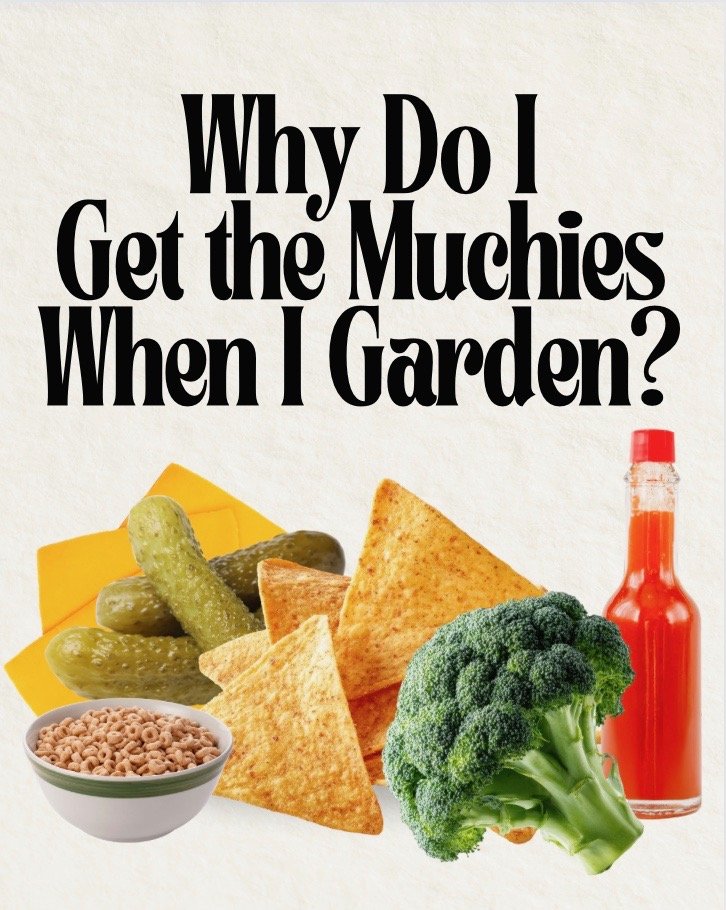
We love a good snack. We simply don't always want to find ourselves standing barefoot in front of the refrigerator at 11 p.m. eating shredded cheese directly from the bag. The munchies are one of flower's most famous side effects, and unlike a lot of stoner lore, there's actual science behind this one. THC interacts with the body's endocannabinoid system and, particularly, CB1 receptors involved in appetite, smell, reward and feeding behavior. In other words, your suddenly urgent relationship with the snack drawer isn't entirely in your imagination.
But does every strain send you searching for chips? Not necessarily.
Some cultivars contain different ratios of cannabinoids, including tetrahydrocannabivarin, better known as THCV, which researchers have investigated for effects that differ significantly from THC. Other strains contain relatively more CBD and less THC, potentially producing a different experience than your typical high-THC flower.
Before we get into our picks, a very important disclaimer: There is no cannabis strain scientifically proven to guarantee that you won't get the munchies. Cannabis affects everyone differently, and cannabinoid concentrations can vary considerably between growers, harvests and individual products. Your dose, tolerance, metabolism, what you've eaten, and the actual chemistry of the flower can all matter. Think of these seven strains as places to start looking, not a promise that the cookies are safe.
First, Why Does Weed Give You the Munchies?
Turns out, your brain has a few tricks up its sleeve.
One fascinating piece of the puzzle involves smell. In a 2014 study published in Nature Neuroscience, researchers studying mice found that CB1 receptors can influence eating by increasing sensitivity to odors. The researchers concluded that CB1 signaling links hunger with "stronger odor processing."
Translation: food may literally smell more enticing.
Then things get even weirder.
A 2015 Nature study led by researchers including Tamas Horvath investigated POMC neurons in the hypothalamus. These neurons are normally associated with satiety, so scientists expected cannabinoid-induced eating to quiet them down. Instead, activating CB1 receptors actually increased POMC neuron activity, and that seemingly backwards response was important to cannabinoid-induced feeding. As the paper explains, "CB1R activation also promotes neuronal activity of POMC cells."
Basically, cannabinoids can mess with some of the brain circuitry that normally helps regulate the difference between "I'm full" and "But have we considered nachos?"
And this isn't only a mouse phenomenon. More recent controlled research involving human participants found that vaporized cannabis "acutely and robustly increased energy intake." Participants consumed more calories soon after cannabis exposure, with the increase occurring primarily during the first 30 minutes that snacks and drinks were available.
The munchies are real, babes. Science has receipts.
So, Can Certain Strains Cause Fewer Munchies?
Possibly, but cannabinoid chemistry is more useful than the words "sativa" and "indica."
One cannabinoid getting particular attention is THCV. Structurally related to THC but pharmacologically distinct, THCV has demonstrated appetite-related effects in preclinical research. However, human evidence remains limited, and a 2024 scientific review specifically cautioned that the popular "diet weed" nickname has gotten ahead of the research.
So we're definitely not calling THCV a weight-loss cannabinoid.
Instead, if avoiding an intense snack attack is your goal, you can look for flower whose lab results show measurable THCV, or consider CBD-forward flower with comparatively low THC. Most importantly, check the cannabinoid panel or Certificate of Analysis rather than relying exclusively on a strain name. Two jars labeled Durban Poison can have very different chemical profiles.
With that giant science asterisk firmly in place, here are seven strains worth knowing.
1. Doug's Varin
If THCV had a celebrity spokesperson, Doug's Varin would be applying for the job.
This rare cultivar was specifically bred for unusually high THCV levels and is commonly described as energetic, focused and clear-headed. Because of its THCV-forward chemistry, it's one of the most logical strains to investigate if you're looking for flower that may be less likely to inspire an emergency pizza order.
Again, check those lab results.
2. Durban Poison
Don't let the slightly terrifying name scare you.
Durban Poison is a legendary South African cultivar known for an uplifting, energetic experience, and some tested versions have contained measurable amounts of THCV. Leafly has reported THCV levels around 0.5% to 1% in examples of the strain, although levels vary significantly by product.
If you're trying to clean the apartment instead of cleaning out the pantry, Durban might be worth investigating.
3. Pink Boost Goddess
She has "goddess" in the name, so naturally we had to invite her.
Pink Boost Goddess is one of the cultivars more specifically associated with THCV-forward breeding and is among the better-documented options for shoppers interested in that cannabinoid. As always, the name on the jar isn't enough. Look for current testing showing what's actually inside.
We love a woman who brings documentation.
4. Jack the Ripper
Another name that sounds significantly less friendly than the experience we're looking for.
Jack the Ripper frequently appears among cultivars associated with THCV and is generally known as an energetic, daytime-leaning option. But the evidence here is much more strain-reputation than clinical science, so consider it a cultivar to investigate rather than an appetite-suppressing recommendation.
Translation: ask to see the cannabinoid numbers before assuming Jack will keep his hands off your snacks.
5. Red Congolese
Red Congolese is another energetic cultivar frequently mentioned alongside Durban Poison in conversations about THCV-associated flower.
The catch? Reliable THCV percentages aren't consistently available across products sold under this name. That makes Red Congolese another great example of why shopping by cannabinoid profile is smarter than shopping by strain mythology.
Read the label. She's your friend.
6. ACDC
If high-THC flower tends to turn your kitchen into an all-you-can-eat buffet, going in a different cannabinoid direction is another option.
ACDC is known for being CBD-forward and relatively low in THC compared with conventional THC-dominant flower. That doesn't mean CBD has been proven to magically eliminate the munchies, because it hasn't. But choosing a product with substantially less THC means you're changing the cannabinoid most strongly associated with cannabis-induced eating.
Sometimes less THC is the plot twist.
7. Harlequin
Harlequin is another well-known CBD-forward cultivar that can offer a more balanced THC-to-CBD profile than today's ultra-potent flower.
Like ACDC, we're including it because its cannabinoid profile can be considerably different from high-THC strains, not because Harlequin itself has been clinically demonstrated to prevent hunger. Check the actual THC and CBD percentages on your product before buying.
Because chemistry > cute strain names.
What to Look for at the Dispensary
If munchies are something you're hoping to minimize, forget obsessing over "indica versus sativa" for a minute and flip over the package.
Look at the actual cannabinoid panel. A cultivar with measurable THCV may be interesting, although human research on its effects on appetite is still developing. Alternatively, CBD-forward flower with substantially less THC may be worth considering if THC tends to make you particularly snacky.
And remember that dose matters. A strain containing THCV can still contain plenty of THC, so THCV on the label doesn't automatically cancel out THC's appetite-stimulating effects.
Healthy Munchies for When the Munchies Win Anyway
Because sometimes your cannabinoid panel says one thing and your stomach says “WHERE ARE THE CHIPS?” Instead of trying to exercise superhuman restraint while elevated, prepare the snacks before the sesh. Some High Herstory favorite healthier options:
Frozen grapes or berries for tiny little nature candies
Apple slices with peanut or almond butter
Greek yogurt with berries and a little honey
Air-popped popcorn with your favorite seasoning
Grillo’s Pickles…IDK why but they have to be Grillo’s
Hummus with carrots, cucumbers and bell peppers
Guacamole with tortilla chips
Watermelon with lime and salt
Dark chocolate with strawberries
Roasted chickpeas for something crunchy
Nuts or trail mix, preferably portioned before you're high enough to consider the entire bag a serving
Frozen sherbert
Tortilla chips and salsa or guacamole, or both!
A Plate of cut up fruit or a fruit salad that includes melon and cucumber and Tajin
Sparkling water with citrus
Of course this is just in a perfect world, and can’t blame you if you end up Door Dashing something else instead! Both are great options in our opinion. The munchies aren't just a cannabis cliché. Research suggests cannabinoids can influence several systems involved in eating, including smell, hypothalamic feeding circuits and the motivation to seek out food. And they get every stoner from time to time.
But there is no magical munchie-proof strain. Cannabis chemistry varies from batch to batch, individual responses vary wildly, and research into cannabinoids like THCV is still developing.
If you're looking for flower that may be less prone to sending you into snack mode, THCV-associated cultivars such as Doug's Varin, Durban Poison and Pink Boost Goddess are interesting places to start, while lower-THC, CBD-forward options like ACDC and Harlequin offer another route. Just check the lab results instead of trusting the strain name alone.
And if the munchies show up anyway?
At least you'll have frozen grapes.